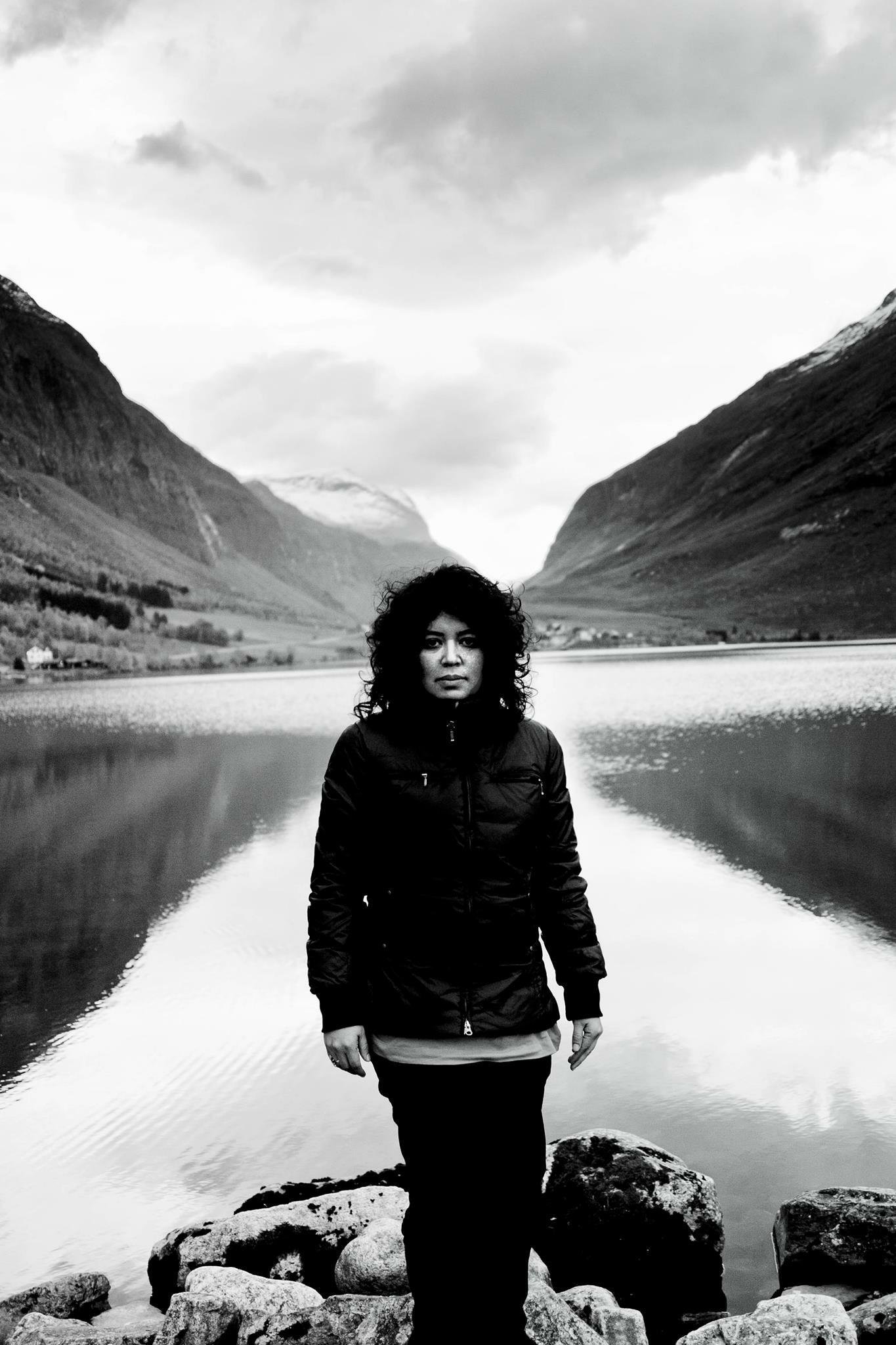
Paula Silva-Ruvalcaba.
Guadalajara, Mexico, 1974. Lives and works in Guadalajara.
Paula’s work develops across art, design, material culture, consciousness studies, and symbolic systems. Her practice begins with the relationship between body, object, and space, and with the ways in which things participate in the construction of memory, human bonds, and everyday experience. Through furniture, image-making, writing, and publishing, she explores objects not only in terms of their function, but as relational presences capable of preserving traces, activating memories, and articulating individual and collective meanings.
Her relationship with wood, carpentry, and furniture making began within her family environment. From this context, Paula approaches the workshop as a space of production, but also as a living archive of gestures, inherited knowledge, human relationships, and material transformations. In her projects, processes of fabrication form part of the meaning of the work: the origins of the materials, the techniques, working conditions, care, and forms of collaboration all participate in what the object may come to represent.
For Paula, furniture occupies an intimate territory between the body and the world. A chair, a table, or a domestic space may organize postures, distances, encounters, and rituals, silently participating in the ways we inhabit. Her work seeks to explore the distance between an object’s manifest function and its symbolic life: what it was created for and what it may become through use, affection, time, and memory.
Through Nada Taller and her family project Fábrica de Muebles, founded in 1984, she brings together practices of art, design, research, and collective production. Collaboration appears as a possibility for transforming initial ideas and bringing together knowledge drawn from craft practices, embodied experience, research, and artistic imagination. Rather than conceiving authorship as absolute control, her practice seeks to produce shared forms situated within specific relationships and contexts.
Paula studied Communication Sciences at ITESO University in Guadalajara from 1992 to 1996. Following four years of professional training at Ontogony in Vancouver, Canada, from 2015 to 2019, she obtained certification as an Ontogonic Body-Mind Therapist. She was a recipient of the FONCA Young Creators fellowship in 2004–2005 and, between 2008 and 2010, participated in international design workshops organized by Domaine de Boisbuchet in France, in collaboration with the Vitra Design Museum and the Centre Pompidou. There, she encountered the practices of Maarten Baas, Fernando and Humberto Campana, Jerzy Seymour, and Stéphane Barbier Bouvet’s Bureau, experiences that left an important mark on her understanding of design.
Her work has been included in group presentations at MoMA Design Store and Casey Kaplan Gallery, New York; Museo de Arte Moderno, Museo Franz Mayer, and Centro Nacional de las Artes, Mexico City; MAZ Museo de Arte de Zapopan, Guadalajara; PDW at Galerie Joseph Froissart, Paris; and Galerie Verticale–L’Espace Vidéographe, Montreal. Her work and projects have been featured in The New York Times, Domus, Designboom, and Dezeen, among other publications.