Yo–Tú.
Paula Silva-Ruvalcaba, 2020.
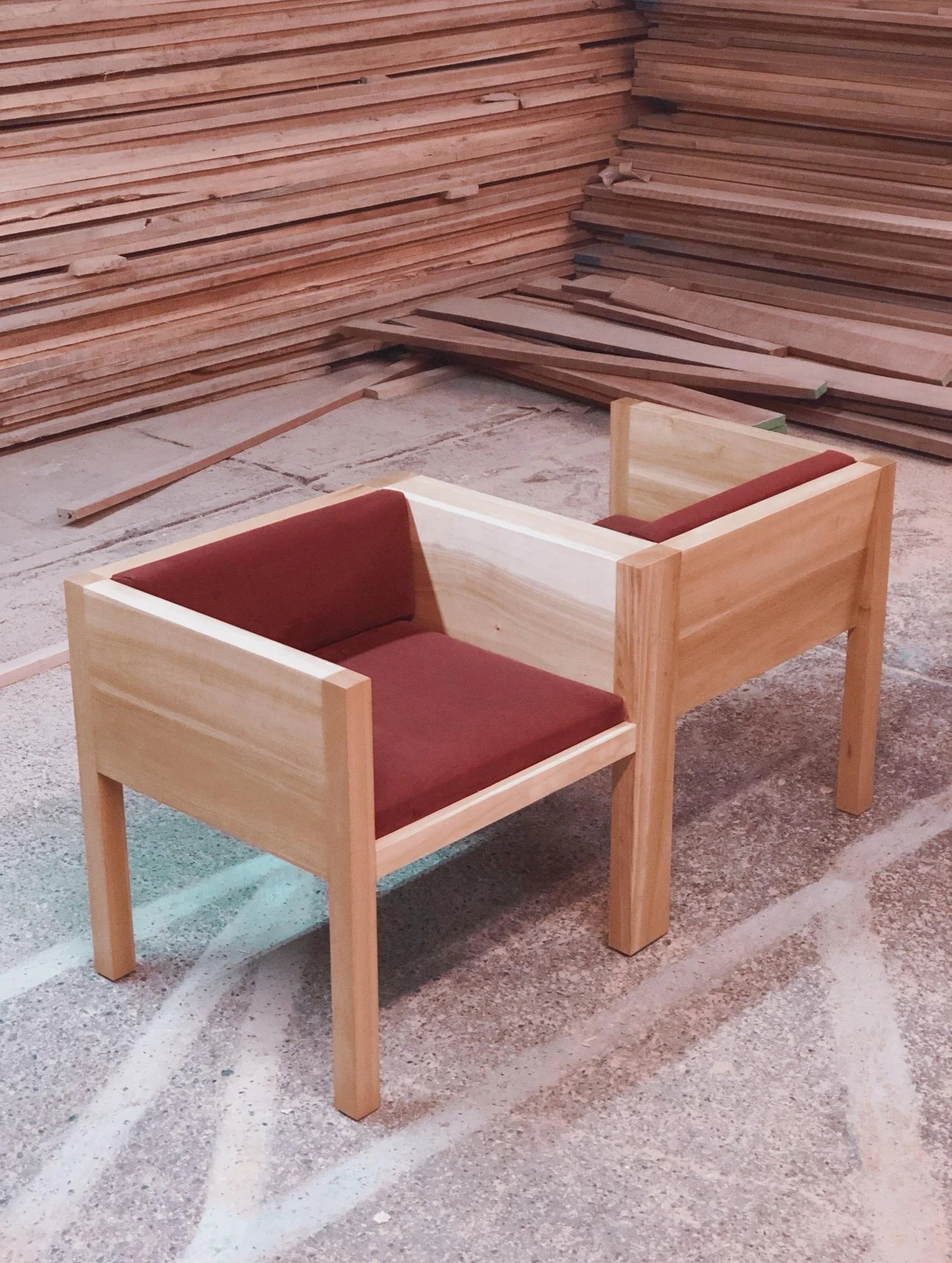
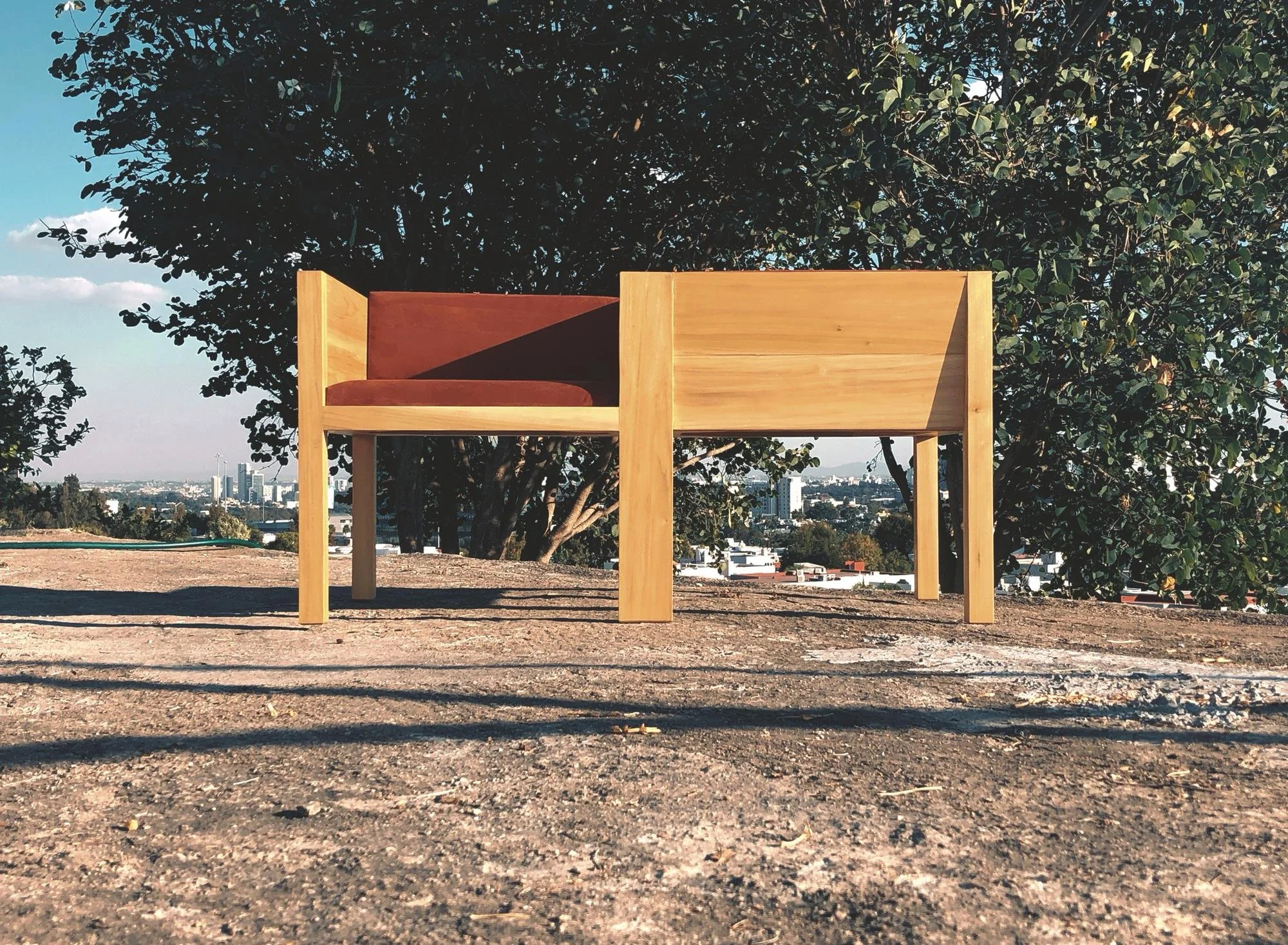
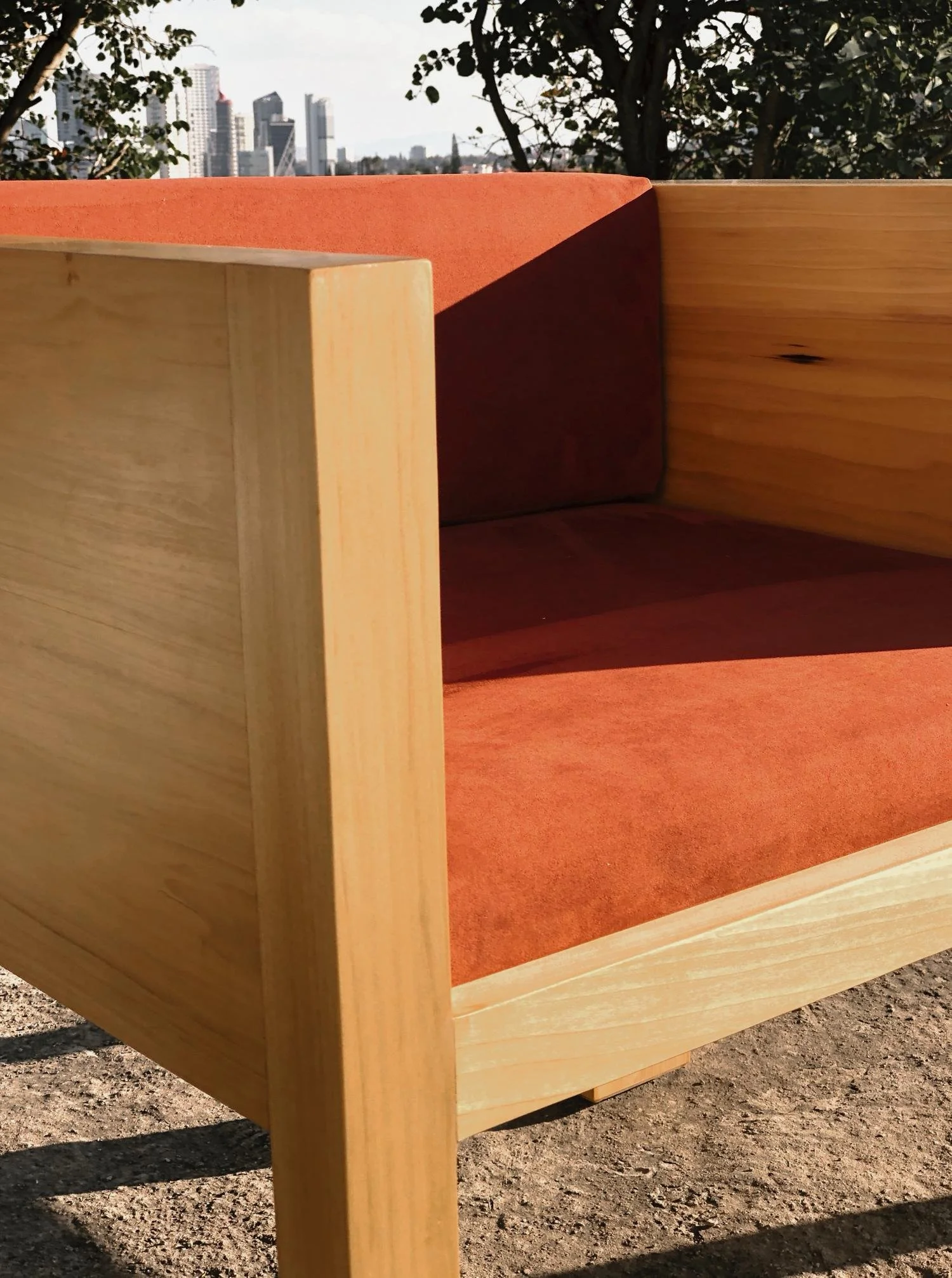
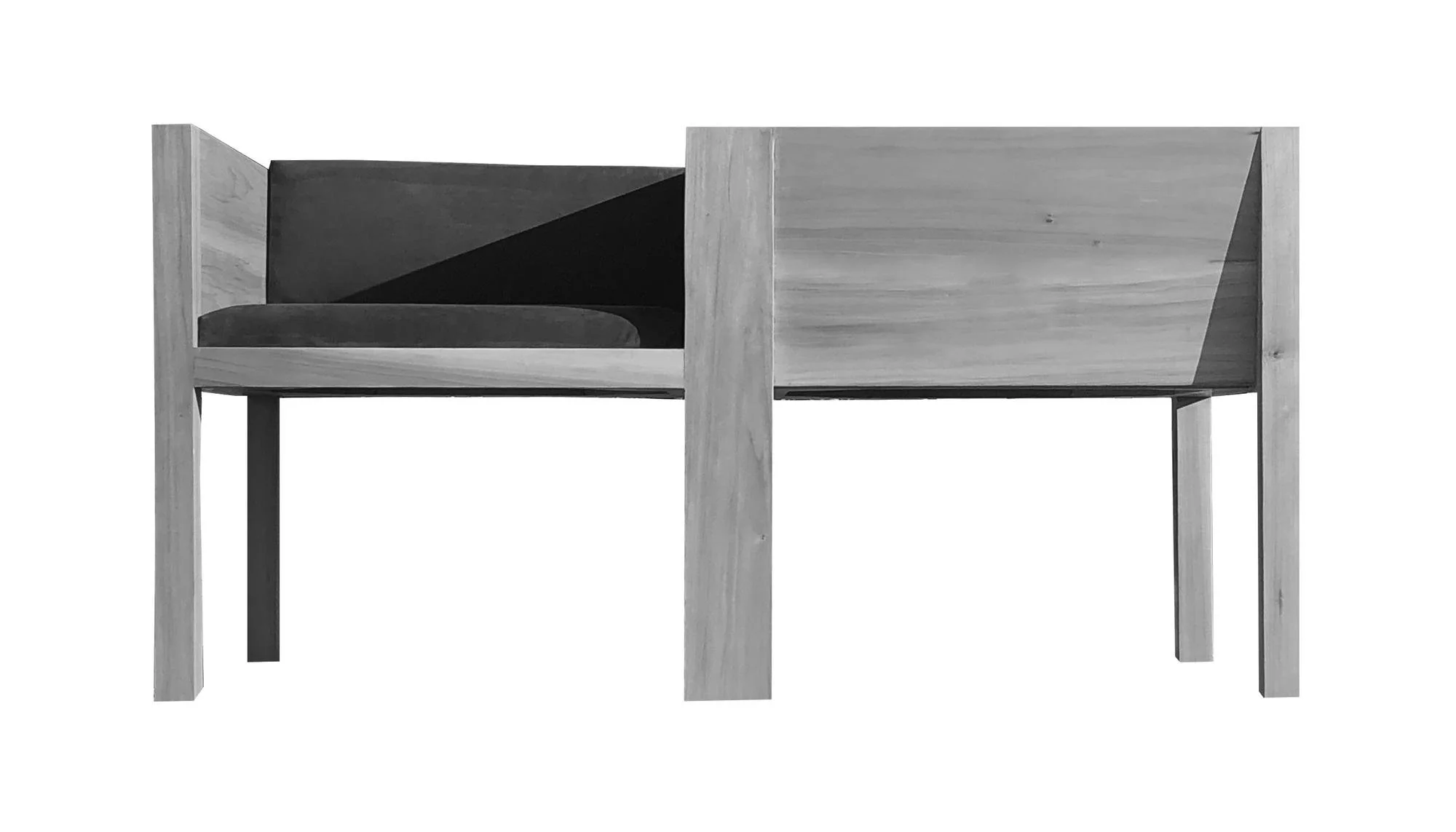
Sillón para dos personas. Madera de roble y terciopelo.
An. 130 × Al. 60 × P. 60 cm.
El modo de existencia sugerido por la palabra fundamental Yo–Tú corresponde a un Yo que encuentra a un Tú y que, en la reciprocidad dialógica, percibe al otro verdaderamente como un Tú.
Para Martin Buber (1878–1965), cuando afirma que la relación es reciprocidad, entrar en relación, en el ámbito humano, significa encontrarse con un ser capaz de responder al don dentro de la gratuidad del encuentro entre personas. El otro se presenta en su diferencia, como un ser único e irreemplazable.
Sin embargo, decir Tú exige decirlo con todo el ser. Al mismo tiempo, para llegar a ser plenamente Yo, necesito de un Tú. En este sentido, la reciprocidad de los dones no es otra cosa que la realización del ser humano: toda vida verdadera es encuentro, una vida realizada podría ser aquella que reconoce que Yo soy Tu y Tu eres Yo.
I–You
Paula Silva-Ruvalcaba, 2020
Lounge chair for two. Oak wood and velvet.
W 130 × H 60 × D 60 cm.
The mode of existence suggested by the fundamental word I–You corresponds to an I that encounters a You and that, in dialogical reciprocity, perceives the other truly as a You.
For Martin Buber (1878–1965), when he states that relationship is reciprocity, to enter into relationship, within the human sphere, means to encounter a being capable of responding to the gift within the gratuitousness of the encounter between human beings. The other presents itself in its difference, as a unique and irreplaceable being.
However, to say You requires saying it with one’s whole being. At the same time, in order to become fully I, I require a You. In this sense, the reciprocity of gifts is nothing other than the fulfillment of the human being: Each true life is an encounter with the other, says Buber as well. A realized life may be one that recognizes that I am You and You are Me.